Margaret Kallus

Research

Working papers

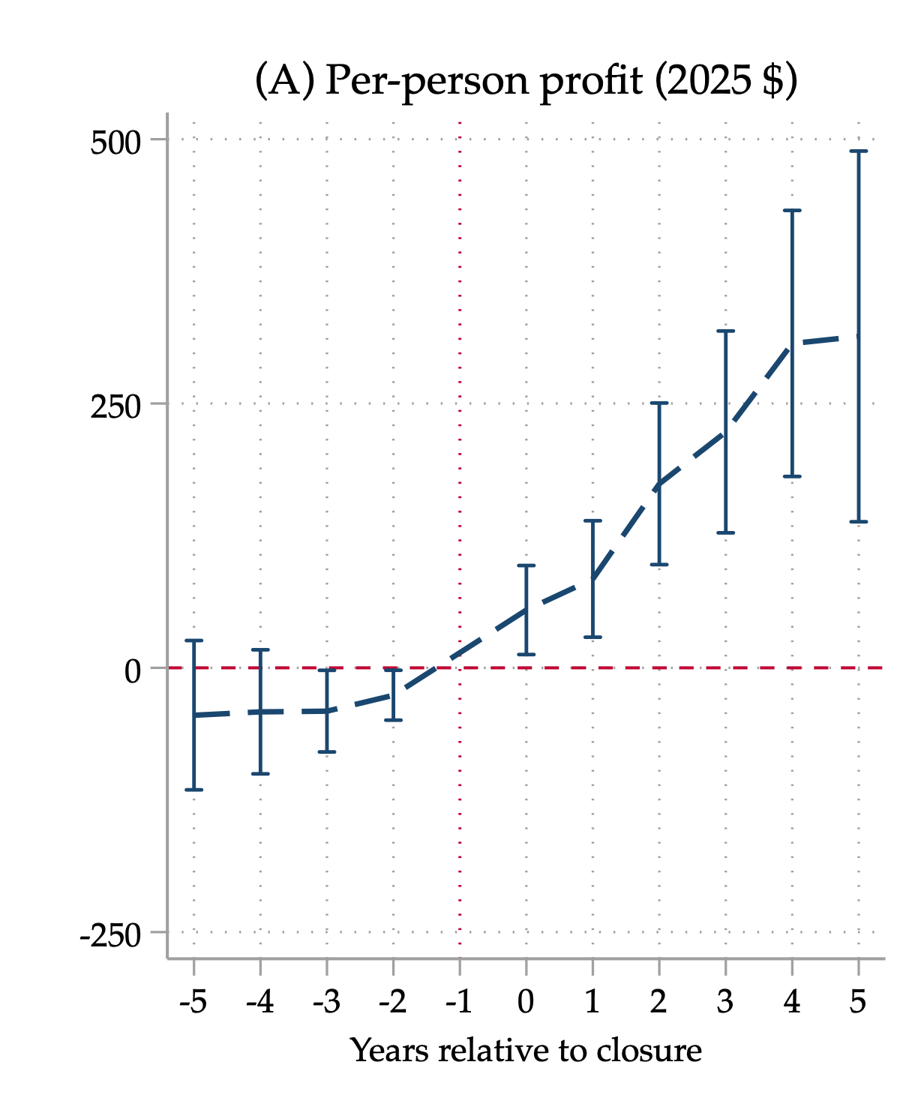
Event study: per-person profit rises after a Medigap block closes (Figure 7, panel A)
Job Market Paper

Deadpooling: Strategic Lock-In in the Medigap Market

with Elaine Shen

Abstract

Adverse selection is a well-known problem in health insurance markets. To prevent consumers from delaying coverage until they need high levels of care and prevent firms from extracting rents on people with high demand for insurance, governments may implement a series of regulations to constrain both buyers and sellers. This paper examines a case of this in the Medicare Supplement market. Linking two decades of Medicare Supplement filings to annual parent–subsidiary ownership records, we document deadpooling, a novel financial practice where insurers use corporate structure to circumvent regulation and extract rents from high-risk consumers. 17.6% of Medigap life-years are spent in plans that deadpool, and each year closures transfer $64.7 million from seniors to insurer profits. Harm to consumers accrues through increased payments to insurers, switching costs, and the change in consumer surplus due to loss of coverage among beneficiaries priced out of the market who cannot get plans from other insurers. We estimate annual lost consumer surplus from deadpooling to total $129.4 million. Each dollar of deadpooling markup collected by insurers costs seniors $2 in surplus. This extraction is a choice rather than the arithmetic of an aging pool. Using a natural experiment in which a federal statute effectively closed some types of plan to new enrollment, we find that deadpooling plans reprice much more aggressively than plans that close by statute. We find that expanding switching rights, an intervention that would eliminate this harm in a market with perfectly rational consumers, only reduces deadpooling by 18%. We explain this finding as a consequence of consumer inattention using a demand-side simulation. We examine alternative solutions that do not rely on consumer attention, and find that these reduce harm by up to 53%, against 5% for expanded switching rights.
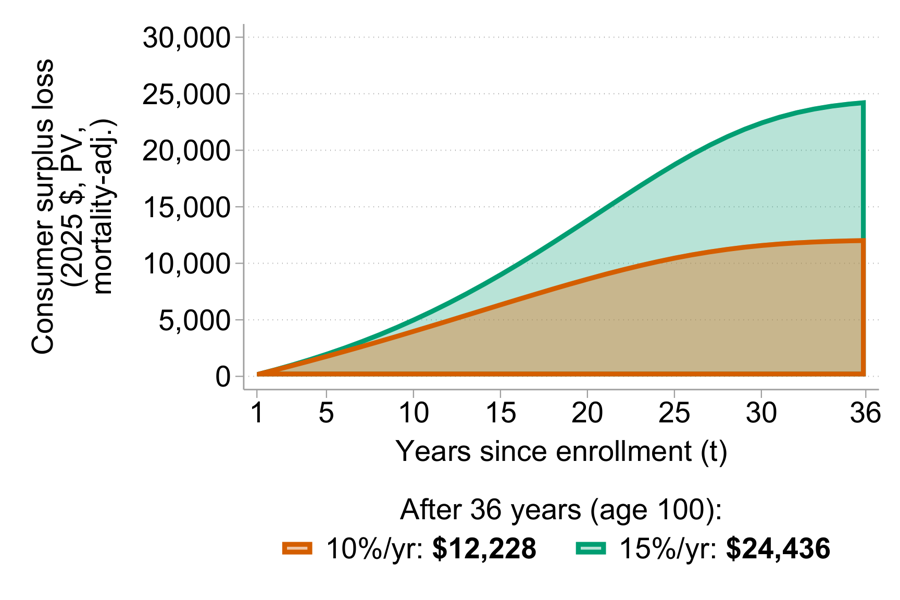
Cumulative consumer surplus loss from dominated broker recommendations over years since enrollment

The Price of “Free” Advice: Measuring Agency Problems in the Medicare Broker Market

with Elaine Shen

Abstract

Consumers turn to experts because they cannot evaluate complex choices, yet these same frictions can leave them unable to evaluate the experts themselves. Agency problems can therefore persist even in competitive, highly regulated markets. We study this problem in the Medicare insurance broker market, a market serving almost 70 million seniors and individuals with disabilities. We conduct an audit study where we hire senior “secret shoppers” to make 637 calls to randomly assigned brokers. Brokers provide at least one misaligned recommendation on 52% of calls and dominated recommendations can cost seniors over $12,000 in present-value lifetime wealth. A natural experiment eliminating broker commissions reduces steering towards a higher-commission plan by 21p.p., but does not eliminate it. A treatment variation designed to increase perceived competition by signaling that seniors will collect multiple recommendations causes brokers to recommend lower-priced plans. Competing on price, however, may also lower plan quality and consumer surplus. Using a structural model to estimate counterfactual policies, we find that supply-side reforms such as equalizing commissions and directing seniors to more experienced brokers lead to larger gains in consumer surplus than policies that can be directly implemented by seniors themselves (e.g. consumer feedback and competitive pressure). The findings highlight limitations to using consumer choice and competition to discipline markets for complex products.

Medigap Access and Medicare Advantage Disenrollment Among Disabled Beneficiaries at Age 65

with Daria Pelech

Work in progress

Pre-PhD publication